If you’ve just been served with a temporary injunction in Broward County, you’re probably feeling a mixture of shock, anger, confusion, and fear — and that’s completely understandable. Being told you may have to leave your own home, that you can’t contact someone you care about, or that a judge made a serious legal decision about your life without you even being in the room is disorienting. You are not alone, and you are not without rights.
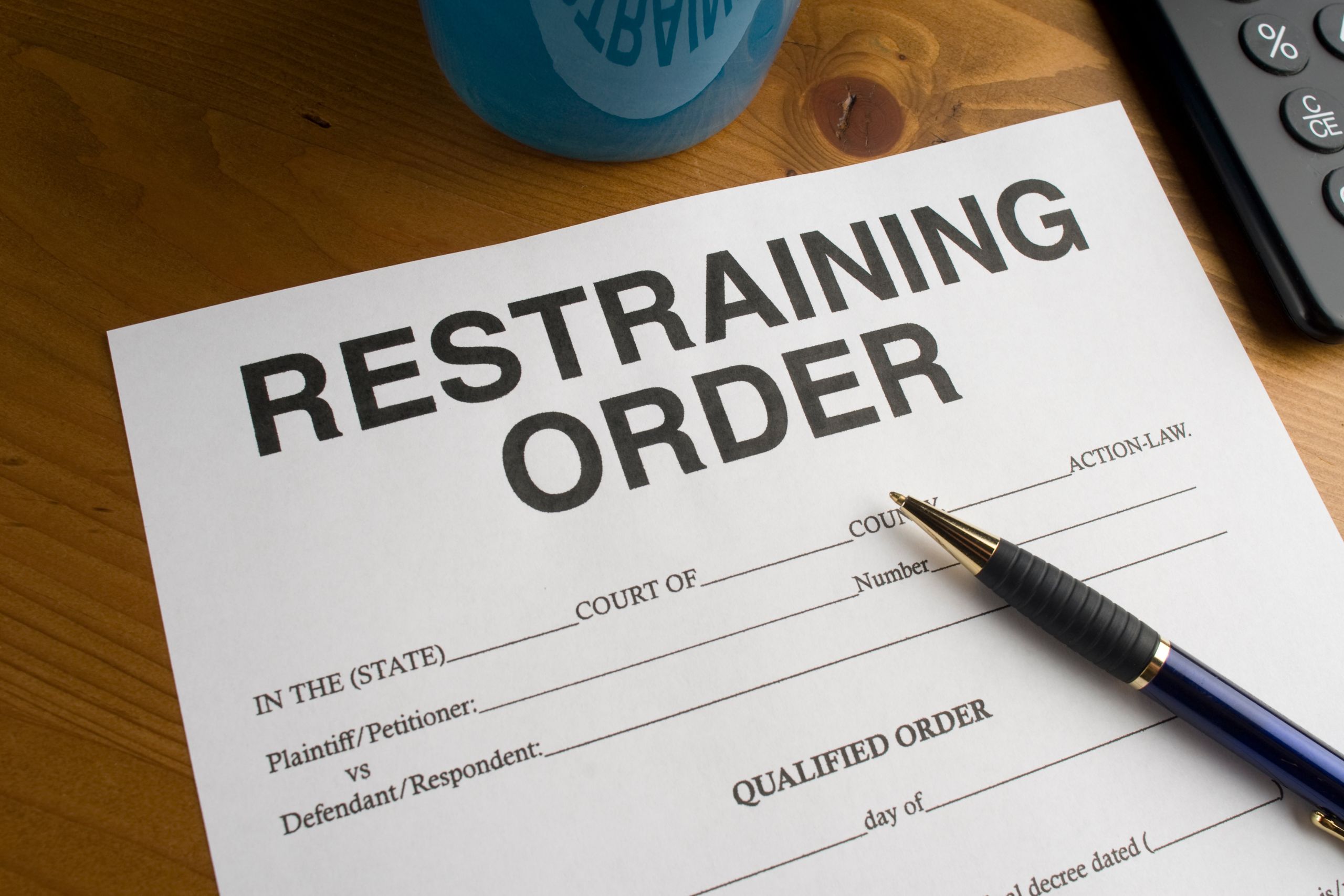
As a Fort Lauderdale defense attorney who has represented countless clients in the injunction process, I want to walk you through exactly what is happening, what the critical 15-day window means for you, and what you absolutely must — and must not — do right now.
What Is a Florida Restraining Order (Injunction for Protection)?
In Florida, what most people call a “restraining order” is formally known as an Injunction for Protection. These are civil orders, but make no mistake: violating one is a criminal offense under Florida law.
Florida recognizes several types of injunctions for protection, governed primarily by Chapter 741, Florida Statutes (domestic violence) and Chapter 784, Florida Statutes (repeat violence, dating violence, sexual violence, and stalking). The most common type encountered in Broward County is the Domestic Violence Injunction, defined under § 741.30, Fla. Stat.
When a petitioner (the person requesting the order) files a petition, a judge reviews it ex parte — meaning without you present — and decides whether to issue a Temporary Injunction. That decision can be made in minutes, based entirely on the petitioner’s account of events.
The 15-Day Window: Understanding the Timeline That Will Shape Your Future
Here is where things get critically important.
Under § 741.30(5)(c), Fla. Stat., when a court issues a temporary injunction, it must schedule a full hearing within 15 days. This hearing is your first real opportunity to appear before a judge, present your side of the story, challenge the petitioner’s allegations, and argue against the entry of a Final Injunction — which can last indefinitely.
This 15-day window is not a formality. It is the most important legal moment you will face in this process.
If you do nothing — if you fail to appear, fail to prepare, or fail to retain a Fort Lauderdale defense attorney — the court can and very likely will enter a permanent injunction against you by default. That order can:
- Permanently bar you from your own home
- Prohibit you from contacting your children
- Prevent you from owning or possessing firearms under both Florida and federal law (18 U.S.C. § 922(g)(8))
- Affect your employment, professional licensing, and housing applications
- Follow you on background checks for the rest of your life
Can They Really Kick Me Out of My Own Home?
Yes — at least temporarily, and potentially permanently if you don’t act.
Under § 741.30(6)(a)(2), Fla. Stat., a court issuing a temporary injunction may order the respondent (that’s you) to vacate the shared residence, regardless of who owns or leases the property. This is one of the most jarring aspects of the law for clients to accept. Even if your name is on the mortgage or the lease, the temporary injunction can require you to leave immediately.
The court can also award the petitioner temporary exclusive use and possession of the home, make temporary child custody determinations, and issue other emergency relief — all before you’ve had a chance to say a single word.
This is why what happens at that 15-day hearing is so consequential.
Your Rights as a Respondent
Despite how powerless the initial service of a temporary injunction can make you feel, you have important legal rights throughout this process:
- The Right to Be Heard. At the full hearing, you have the right to appear, present evidence, call witnesses, cross-examine the petitioner, and make legal arguments. This is your due process right under both the Florida and U.S. Constitutions. The Florida Supreme Court has consistently recognized that even in the expedited injunction context, respondents must be afforded meaningful procedural protections. See Dep’t of Law Enforcement v. Real Property, 588 So. 2d 957 (Fla. 1991) (reaffirming due process requirements in Florida civil proceedings involving property and liberty interests).
- The Right to Legal Representation. You have the right to retain a Fort Lauderdale defense attorney to represent you at the hearing. You are not required to face this alone.
- The Right to Challenge the Evidence. The petitioner’s allegations must meet the legal standard under § 741.30. You may challenge the credibility of their account, introduce contradictory evidence such as text messages, call logs, or witness testimony, and expose inconsistencies or false statements.
- The Right to Request a Continuance. If 15 days is insufficient time to prepare your defense — which it often is — your attorney can request additional time to gather evidence, though the court has discretion in granting this.
Your Responsibilities as a Respondent — What You MUST Do
1. Comply with the temporary order immediately and completely. Even if you believe the allegations are false, fabricated, or exaggerated — and many are — you must comply with every term of the temporary injunction the moment you are served. There is no gray area here. Violating a temporary injunction is a first-degree misdemeanor under § 741.31, Fla. Stat., punishable by up to one year in jail, and can be charged as a third-degree felony if the violation involves violence or if you have prior violations. A criminal charge on top of a civil injunction will devastate your position at the 15-day hearing.
2. Contact a Fort Lauderdale defense attorney immediately. The 15-day clock is already running. Every day you wait is a day your attorney cannot use to gather evidence, interview witnesses, or build your defense.
3. Document everything. Begin preserving evidence right now. Save all text messages, emails, social media communications, voicemails, and any records that establish your version of events. If there are witnesses who can speak to the petitioner’s allegations — or to your relationship with them — identify them now.
4. Secure alternative housing if required. If the order requires you to vacate the residence, you must comply even if it means staying with a friend or family member or in a hotel. Returning to the home in violation of the order is not worth the criminal consequences.
What You Must NOT Do
- Do not contact the petitioner — not even to “work things out.” This is the single most common and most damaging mistake respondents make. The order prohibits contact. A phone call, a text, a message through a mutual friend, contact through your children — all of it is a violation. Even if the petitioner contacts you first, responding can be charged as a violation. Do not do it.
- Do not use social media to discuss the case or the petitioner. Anything you post publicly can and will be used against you at the hearing. Screenshots live forever.
- Do not surrender firearms in a way that creates legal exposure. If the order requires you to surrender firearms, consult with your attorney before doing so. How and where you surrender them matters.
- Do not miss the hearing. Failing to appear at the 15-day hearing is essentially handing the petitioner a permanent injunction by default. No matter how confident you are that the allegations are baseless, not showing up removes any chance you have to fight it.
- Do not try to represent yourself. Injunction hearings involve rules of evidence, legal standards, and courtroom procedure that can be difficult to navigate without legal training. A skilled Fort Lauderdale defense attorney knows how to present your case effectively, how to cross-examine the petitioner, and how to make legal arguments that can make the difference between a dismissed petition and a permanent order.
What Happens at the 15-Day Hearing?
The full hearing under § 741.30(6), Fla. Stat. is your opportunity to contest the injunction. Both parties may present evidence and testimony. The judge will determine whether the petitioner has established by competent substantial evidence that domestic violence has occurred, or that there is an imminent danger of domestic violence occurring.
If the judge finds in your favor, the temporary injunction is dissolved and no permanent order is entered. If the judge finds against you, a Final Judgment of Injunction is entered — potentially with no expiration date.
A final injunction can be modified or dissolved in the future, but that requires filing a motion, returning to court, and demonstrating a substantial change in circumstances. It is far better to fight it at the 15-day hearing than to try to unravel a permanent order years down the road.
False Allegations: More Common Than You Might Think
Courts take domestic violence petitions seriously, and they should. But the bar for filing is low, and the system can be abused. It is not uncommon for injunction petitions to be filed during contentious divorces or custody disputes, after a bad breakup, or in retaliation for an unrelated conflict.
Florida courts have recognized this reality. In Gustafson v. Mauck, 743 So. 2d 614 (Fla. 4th DCA 1999), the Fourth District Court of Appeal (which covers Broward County) reversed a final injunction where the evidence presented was insufficient to support the statutory standard of objective reasonableness. The question is whether a defendant’s conduct gives plaintiff objectively reasonable grounds to fear they are in imminent danger. Evidence matters. Preparation matters.
If the allegations against you are false or exaggerated, an experienced Fort Lauderdale defense attorney can help you demonstrate that to the court.
How a Fort Lauderdale Defense Attorney Can Help You
The stakes here are too high to navigate alone. Here is what an experienced Fort Lauderdale defense attorney brings to your 15-day hearing:
- Legal Strategy. Your attorney evaluates the petitioner’s allegations against the legal standard required under § 741.30 and identifies weaknesses, inconsistencies, and evidentiary gaps that can be exposed at the hearing.
- Evidence Gathering. Attorney-driven investigation — subpoenaing records, locating witnesses, obtaining surveillance footage, pulling communication records — can paint a very different picture than the one-sided account in the petition.
- Cross-Examination. Skilled cross-examination of the petitioner can reveal credibility issues, prior false statements, motives for filing, and exaggerations that undermine their case.
- Courtroom Presence. Judges and opposing parties respond differently when a respondent is represented by counsel. Having a knowledgeable attorney by your side signals that you are taking this seriously and that you intend to defend yourself.
- Protecting Your Criminal Record. If there are related criminal charges — or if a violation of the temporary order has already occurred — your attorney can address both the civil injunction and the criminal exposure simultaneously, protecting your record on both fronts.
- Long-Term Consequences. A permanent injunction affects your Second Amendment rights, your ability to pass background checks, your professional licenses, and your custody rights. Your attorney advocates not just for today’s hearing but for your long-term future.
The Bottom Line
A temporary injunction is not a conviction. It is not a final determination of guilt. It is the beginning of a legal process — and the 15-day hearing is the moment where that process can go in your favor, if you are prepared.
You have the right to defend yourself. You have the right to tell your side of the story. And you have the right to a skilled Fort Lauderdale defense attorney who will fight to protect your home, your family, your freedom, and your future.
If you’ve been served with a temporary injunction in Broward County, don’t wait. Call our office today for a confidential consultation. The clock is already running.
Call Fort Lauderdale Criminal Defense Attorney Richard Ansara at (954) 761-4011. Serving Broward County.
Additional Resources:
Injunctions Overview, Florida Courts Administrator
More Blog Entries:
Understanding the Police Lethality Assessment in Fort Lauderdale Domestic Violence Investigations, Jan. 18, 2026, Fort Lauderdale Restraining Order Defense Lawyer