
Articles Tagged with defense lawyer

If you’ve just been served with a temporary injunction in Broward County, you’re probably feeling a mixture of shock, anger, confusion, and fear — and that’s completely understandable. Being told you may have to leave your own home, that you can’t contact someone you care about, or that a judge made a serious legal decision about your life without you even being in the room is disorienting. You are not alone, and you are not without rights.Fort Lauderdale restraining order defense
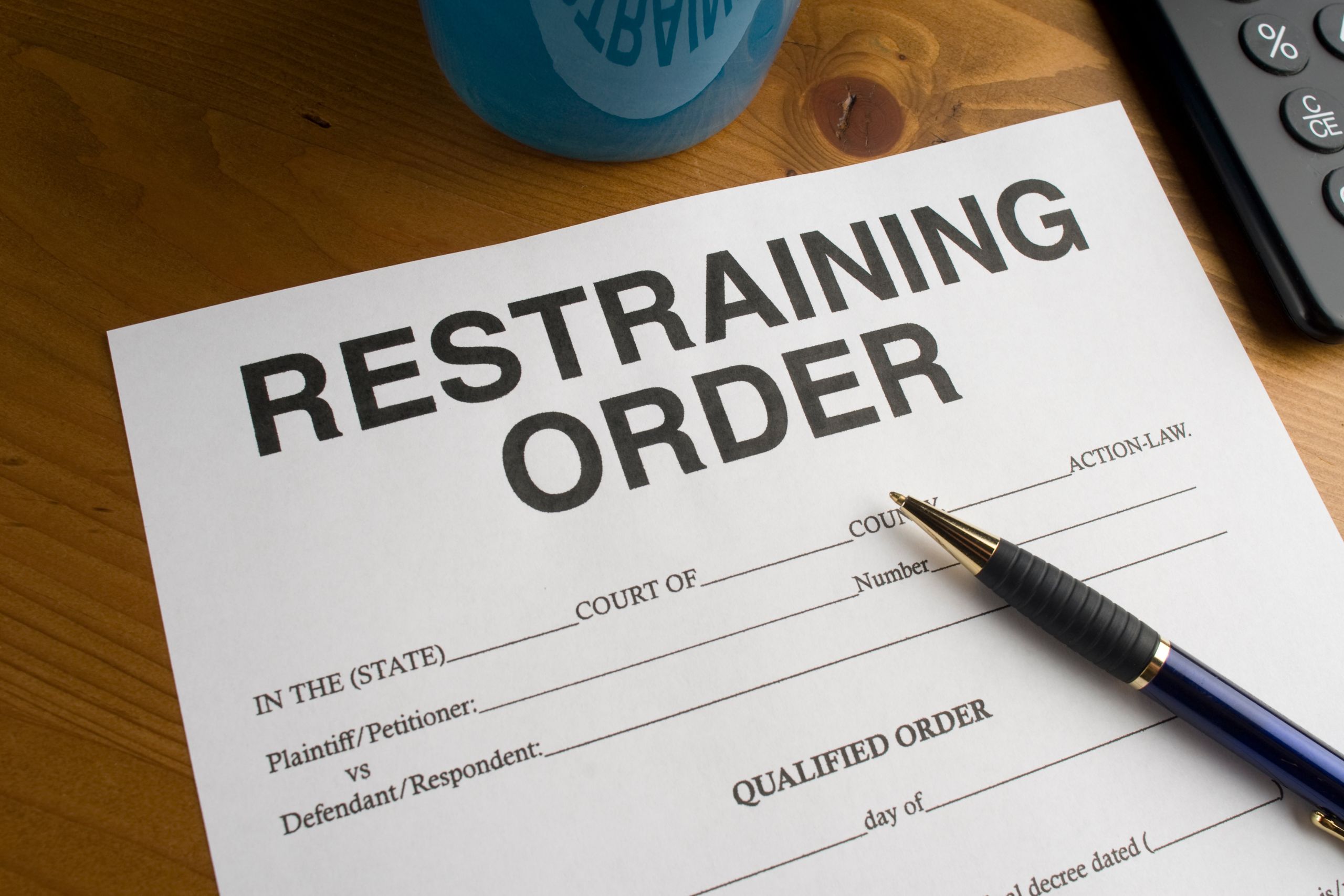
As a Fort Lauderdale defense attorney who has represented countless clients in the injunction process, I want to walk you through exactly what is happening, what the critical 15-day window means for you, and what you absolutely must — and must not — do right now.

What Is a Florida Restraining Order (Injunction for Protection)?

In Florida, what most people call a “restraining order” is formally known as an Injunction for Protection. These are civil orders, but make no mistake: violating one is a criminal offense under Florida law.

Florida recognizes several types of injunctions for protection, governed primarily by Chapter 741, Florida Statutes (domestic violence) and Chapter 784, Florida Statutes (repeat violence, dating violence, sexual violence, and stalking). The most common type encountered in Broward County is the Domestic Violence Injunction, defined under § 741.30, Fla. Stat.

When a petitioner (the person requesting the order) files a petition, a judge reviews it ex parte — meaning without you present — and decides whether to issue a Temporary Injunction. That decision can be made in minutes, based entirely on the petitioner’s account of events.

The 15-Day Window: Understanding the Timeline That Will Shape Your Future

Here is where things get critically important.

Under § 741.30(5)(c), Fla. Stat., when a court issues a temporary injunction, it must schedule a full hearing within 15 days. This hearing is your first real opportunity to appear before a judge, present your side of the story, challenge the petitioner’s allegations, and argue against the entry of a Final Injunction — which can last indefinitely.

This 15-day window is not a formality. It is the most important legal moment you will face in this process.

If you do nothing — if you fail to appear, fail to prepare, or fail to retain a Fort Lauderdale defense attorney — the court can and very likely will enter a permanent injunction against you by default. That order can:

  • Permanently bar you from your own home
  • Prohibit you from contacting your children
  • Prevent you from owning or possessing firearms under both Florida and federal law (18 U.S.C. § 922(g)(8))
  • Affect your employment, professional licensing, and housing applications
  • Follow you on background checks for the rest of your life

Can They Really Kick Me Out of My Own Home?

Yes — at least temporarily, and potentially permanently if you don’t act.

Under § 741.30(6)(a)(2), Fla. Stat., a court issuing a temporary injunction may order the respondent (that’s you) to vacate the shared residence, regardless of who owns or leases the property. This is one of the most jarring aspects of the law for clients to accept. Even if your name is on the mortgage or the lease, the temporary injunction can require you to leave immediately.

The court can also award the petitioner temporary exclusive use and possession of the home, make temporary child custody determinations, and issue other emergency relief — all before you’ve had a chance to say a single word.

This is why what happens at that 15-day hearing is so consequential.

Your Rights as a Respondent

Despite how powerless the initial service of a temporary injunction can make you feel, you have important legal rights throughout this process: Continue reading


If you are accused of a crime in Fort Lauderdale, you are guaranteed the right to a speedy trial. That means that criminal cases can be successfully dismissed if there are prosecutorial delays that violate a defendant’s due process right to a speedy trial. But what is the exact period of time that triggers a violation of this due process right? Your Fort Lauderdale criminal defense attorney should closely examine the facts of your case to ascertain whether a motion to dismiss under a due process argument makes sense.Fort Lauderdale criminal defense attorney

Generally, your criminal defense attorney will need to prove one’s defense is compromised by the delay and the prosecutor had not good reason justifying the delay OR that the prosecution has been delayed beyond specified limits.

There are two basic types of speedy trial rights for Florida criminal defendants.

  • Statutory speedy trial. These are afforded according to Rule 3.191 of the Florida Rules of Criminal Procedure. These require one’s trial takes place within a very specific time window – 90 days for a misdemeanor and 175 days for a felony.
  • State/federal constitutional protection under the Sixth Amendment. These provide for a speedy trial even if your statutory remedy er state law has been waived, effectively mandating due process protections.

Your Fort Lauderdale criminal defense team may well advise you NOT to seek a speedy trial; that may not be in your best interests, particularly in complex felony cases where the stakes are high, testimony is conflicting, discovery is extensive and expert witness testimony is warranted. However, if your case has sat on the back burner for an extended period of time, your defense lawyer may be wise to file a motion to dismiss due to a delay by the prosecution. This is not as uncommon as one might think, particularly in cases involving extensive delays in processing laboratory work.  Continue reading

A new Florida law signed by Governor Rick Scott takes aim at opioid trafficking and possession, imposing harsher penalties for those convicted of dealing and using pills, heroin, fentanyl and more. The measure, House Bill 477, enacts new mandatory minimum sentences for opioid users and dealers and establishes new bans on trafficking drugs that include synthetic marijuana and fentanyl.drug defense lawyer

The new law sets mandatory minimum sentences for convicted dealers, which will force judges to lock away drug offenders for extended periods of time with little opportunity for discretion.

All this is despite the growing realization that “tough-on-crime” drug laws simply do not work, and disproportionately affect poverty-stricken and minority communities. Meanwhile, the state will receive $27 million in federal grant money to help pay for its enforcement.  Continue reading

Fingerprint matching has long been considered a critical investigative tool. However, despite its longtime claims of being infallible, the practice started to fall out of favor over the last few years with emerging science indicating that finding a “match” on a fingerprint was more likely to indicate a concordant connection than one that is without a doubt identical. criminal defense lawyer

As noted in a 2014 study published in the journal Public Library of Science, examination of latent fingerprints is often a complex task, even with advanced image processing. In many cases, fingerprints gathered at crime scenes contain less information than those collected under controlled conditions. They can be distorted and might only contain part of the total fingerprint. So despite assertions that fingerprint analysis is “infallible” or has a “zero error rate,” there are many cases in which errors are found and we find that certain assertions of infallibility were implausible.

Despite this, police and prosecutors in South Florida are increasingly relying on fingerprint evidence and analysis in making their cases against criminal defendants in Fort Lauderdale and surrounding areas. Continue reading

Contact Information